Nisab and hawl
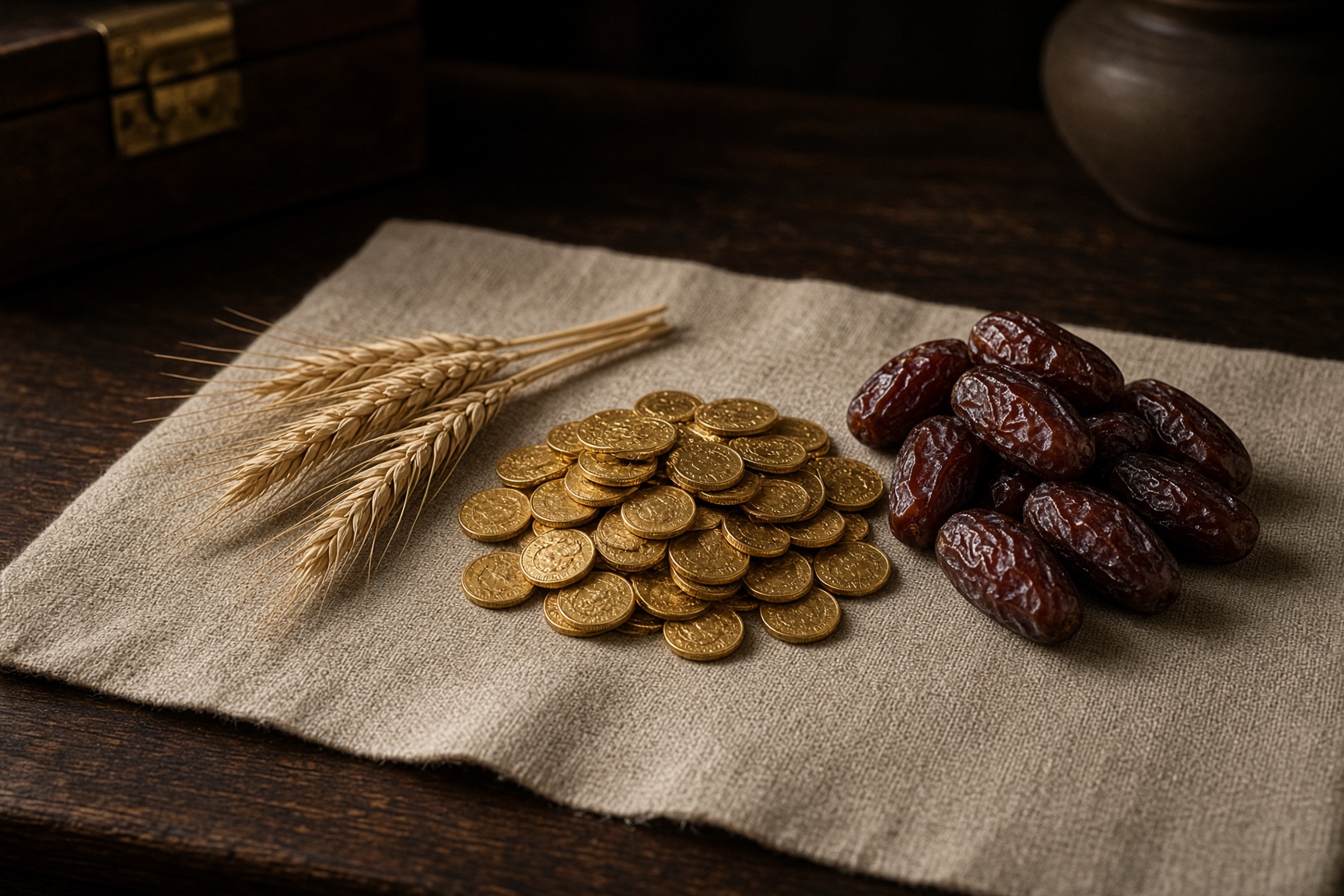
Nisab is the threshold. Gold nisab is 87.48g of gold. Silver nisab is 612.36g of silver. Silver nisab is much lower in sterling terms, so more people become liable. Many UK scholars now prefer gold nisab for cash-based wealth; Hanafi practice often keeps silver. Pick a method, write it down, and do not hop to save money.
Hawl is one lunar year of holding above nisab. If you are already above nisab, a practical method is to pick a date (Ramadan is common) and calculate every year on that date, rather than tracking every pound’s birthday.
What sits in the pot
Cash, gold and silver (including coins and bars), trade inventory, receivables you expect to collect, crypto treated as mal, and the zakatable portion of investments. Deduct debts that are due now, not a 25-year home finance balance in full.
Personal use — your home, furniture, car, clothes — is not zakatable. Evidence for that is as old as the school texts. A second house held as investment is not personal use.
Jewellery, shares, pensions
Worn gold jewellery: Hanafis generally still include it; many Maliki, Shafi’i, and Hanbali positions exempt reasonable personal jewellery. Do not mix schools to zero out a vault of sovereigns you call “my wife’s everyday pair”.
Shares: traders zakat on market value. Long-term investors often zakat on the zakatable assets inside the company (cash, inventory, receivables) — harder without a look-through. A common conservative shortcut is 2.5% of market value. Pensions: if you cannot access the pot, many scholars delay zakat until access, or apply it only to the accessible slice. See the pensions guide.